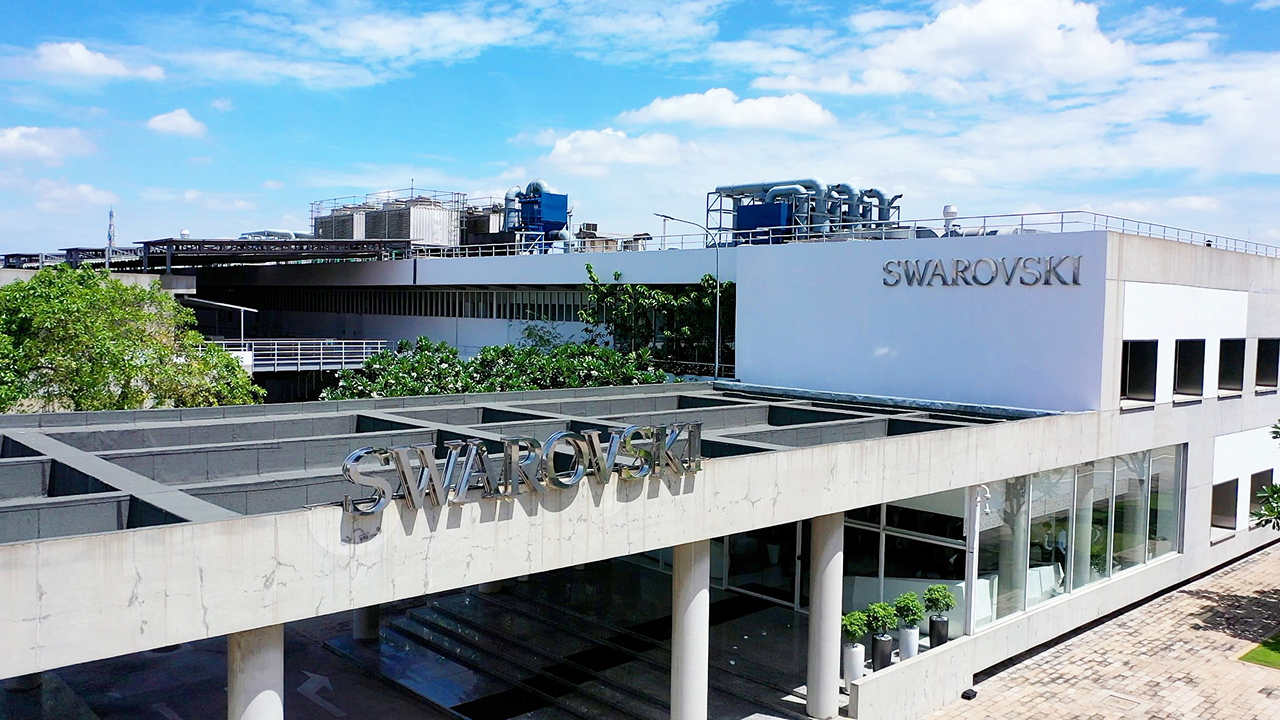
As the second-largest manufacturing site for the global Swarovski Crystal Business, Swarovski Manufacturing Vietnam operates a high-scale factory in the Amata Industrial Park, Bien Hoa City. With a workforce of over 2,000 employees, the facility is a cornerstone of Swarovski’s jewelry and fashion accessory production, combining precision craftsmanship with large-scale industrial operations.
For a global leader like Swarovski, maintaining a unified view of the workforce is essential for strategic agility. However, the manufacturing landscape in Vietnam presents unique operational and regulatory requirements. Managing a high-volume workforce of 2,000+ employees in a factory setting requires granular control over complex shift rosters, real-time biometric attendance, and strict adherence to localized social insurance and tax laws.
Swarovski needed a solution that could bridge the gap between their global "system of record" and the specialized needs of a large-scale Vietnamese factory.
The project focused on creating a seamless, automated bridge between Workday HCM and Cadena HRM Series 5. The objective was to ensure that global employee data and local operational data remained in perfect sync, while automating the most labor-intensive aspects of Vietnamese payroll and compliance
As a global leader in medical equipment, Omron Healthcare Manufacturing Vietnam (OHV) is dedicated to "Going for Zero" – aiming for zero heart attacks and strokes through precision monitoring technology. Operating from their state-of-the-art facility in Binh Duong, OHV manages a technically skilled workforce of 1,500 employees. In the high-stakes world of medical manufacturing, operational excellence depends not just on the quality of their blood pressure monitors, but on the precise management of the people who build them.
For a multinational manufacturing giant, maintaining a unified global vision is critical for supply chain stability. However, Vietnam's labor landscape features intricate statutory requirements, specialized shifts, and unique social benefit structures.
A significant hurdle was that Omron's internal legacy systems were outdated and lacked Employee Self-Service (ESS) functionality. This technical gap meant that even simple tasks—such as updating personal profiles, checking payslips, or requesting leave—required manual paper-based processes or direct HR intervention. This led to a staggering amount of administrative work for the HR team and store managers, diverting their focus from strategic manufacturing goals.
OHV needed a solution that could harmonize their global corporate "Source of Truth" (SAP SuccessFactors) with a localized engine that could eliminate administrative friction through automation and digital self-service.
Launched in 2025, the first phase of the project established a fully integrated digital ecosystem using Cadena HRM Series 5. This implementation replaced legacy processes with a modern, web-based framework designed for scalability and transparency.
As Vietnam’s premier luxury integrated resort, Hoiana Resort & Golf stands as a beacon of high-end tourism in Central Vietnam. Spanning a massive coastal footprint, the destination combines an award-winning golf course, a state-of-the-art casino, and a collection of world-renowned luxury hotel brands. Managing such a multi-faceted operation requires a workforce of 2,000 employees who deliver 24/7 excellence across diverse departments, from gaming floors to guest suites.
After years of adapting a global HR system to Vietnam's hospitality industry, Hoiana switched to Cadena for a solution better suited to its operational needs. Cadena's attendance module helps Hoiana manage its 2,000 employees with greater accuracy and compliance, while streamlining HR operations and costs.
Prior to partnering with Cadena, Hoiana spent several years attempting to implement a well-known global HR system for their attendance and payroll needs. Despite the global reputation of the previous software, the project did not succeed. The primary obstacle was the system's inability to keep pace with the high frequency of labor law changes in Vietnam and the prohibitive ongoing investment costs required to customize a global platform for local statutory compliance.
Hoiana needed a partner that understood the unique "always-on" nature of the hospitality industry while offering a proven, cost-effective solution for Vietnamese regulatory compliance. They required a system that could handle the complexity of a 2,000-person integrated resort without the friction of a global-only architecture.
As the licensed operator for Starbucks Coffee across several high-growth Southeast Asian markets, Maxim’s Group manages a sprawling retail network. With over 2,000 employees across 170+ stores in Vietnam, Cambodia, and Laos, the Hong Kong-based group serves as a critical pillar of the brand’s regional presence, balancing premium coffee culture with high-velocity retail operations.
[DRAFT — pending Marketing/Marc approval] As the licensed operator for Starbucks Coffee across Vietnam, Cambodia, and Laos, Maxim's Group must maintain brand consistency and operational excellence across a rapidly expanding retail network. Managing a high-velocity workforce of 2,000+ employees across 170+ stores requires granular control over complex shift rosters, real-time attendance tracking, and strict adherence to multi-country social insurance and tax regulations.
[DRAFT — pending Marketing/Marc approval] Maxim's Group needed a solution that could bridge the gap between their global "system of record" (Workday) and the specialized, localized payroll and compliance needs of high-velocity retail operations across three different countries.
The 2021 project centered on a comprehensive upgrade to Cadena HRM Series 5, creating a seamless, automated bridge with Workday. This shift moved the group from localized "data islands" to a synchronized, high-performance ecosystem.
As a fast-growing global leader in Power Tools, Accessories, and Outdoor Power Equipment, Techtronic Industries (TTI) operates a high-velocity manufacturing environment in Vietnam. With a strategic focus on innovation and cordless technology, TTI’s local operations serve as a vital hub for their global supply chain, requiring a digital infrastructure capable of matching the relentless pace of their production lines.
When TTI first launched its Vietnam operations in 2019, the project began with a foundational team of fewer than 1,000 employees. However, following a trajectory of explosive growth, the operation has since surged toward nearly 20,000 employees across two distinct legal entities.
The primary obstacle was the sheer volume of operational data generated every 24 hours. Managing a workforce of this magnitude in a factory setting requires processing tens of thousands of biometric "punches" daily. TTI needed a way to instantly validate this enormous stream of real-time attendance data against complex shift rosters to ensure that not a single minute of overtime or social insurance contribution was miscalculated.
The project centered on implementing Cadena HRM Series 5 as the core engine for workforce management. The objective was to create a high-performance bridge between the factory floor and the finance office, automating the most labor-intensive aspects of Vietnamese payroll compliance.
As the leading homegrown coffee chain in Vietnam, Highlands Coffee is an iconic brand synonymous with Vietnamese coffee culture. From its signature Phin Sua Da to a wide array of teas and snacks, Highlands Coffee operates a vast retail network that brings people together. Beyond the beans, the brand is a massive employer, fueling the local economy through its extensive footprint of over 400 outlets across the nation.
Managing a retail giant requires more than just brewing the perfect cup; it requires high-precision workforce management. Before 2019, Highlands Coffee faced a significant operational hurdle: nearly all HR, attendance, and payroll functions were performed manually using Excel.
With a rapidly growing workforce, this manual approach became a bottleneck. Reconciling thousands of rows of data across hundreds of spreadsheets led to high risks of human error, delayed payroll cycles, and a lack of real-time visibility into labor costs. The primary challenge was to digitize this "Excel-based" foundation into a system that could handle the enormous volume of daily attendance data while managing the logistical complexity of temporary staff transfers across 400+ different locations.
The partnership with Cadena HRM Series 5 has evolved through several strategic phases, transforming Highlands Coffee’s HR department from manual spreadsheets into a high-tech command center.
As one of the world’s largest market research agencies, Ipsos Group S.A. operates in 90 markets, delivering actionable insights that help clients navigate a complex world. With a vast network of professional researchers and field interviewers, Ipsos relies on precise data - not just for its clients, but for its own global workforce management across the Southeast Asian region.
For a global leader in data and analytics, maintaining a unified "Source of Truth" is non-negotiable. However, Southeast Asia presents a mosaic of labor laws, tax codes, and unique workforce structures. Ipsos needed to harmonize its global corporate standards with the granular, localized requirements of five distinct markets, each with its own statutory landscape.
The primary hurdle was bridging the gap between Oracle HCM, their global system of record, and the highly specialized payroll and compliance needs of a regional workforce exceeding 1,000 employees.
The project focused on creating a robust, automated bridge between Oracle HCM and Cadena HRM Series 5. This ensured that global employee data remained in perfect sync with local payroll engines, eliminating manual intervention and regional compliance risks.
As a global leader in rail infrastructure, Colas Rail designs, builds, and maintains transport networks that connect societies. From high-speed lines to light rail and tramways, their operations require a highly mobile, technically skilled workforce capable of delivering complex engineering projects under rigorous safety and regulatory standards.
Before this regional transformation, Colas Rail faced a fragmented administrative landscape where each country operated in a silo; payroll and HR tasks were managed through a disconnected mix of Excel spreadsheets and various local HR software across the Southeast Asian region.
For a multinational infrastructure giant, maintaining a unified global view of human capital is vital for project steering. However, the Southeast Asian rail sector presents a landscape of diverse labor regulations and statutory requirements.
A primary obstacle was the sheer logistical and financial burden of integration. Attempting to integrate SAP SuccessFactors with multiple different local vendors across five countries would have been a massive challenge from both a time and cost perspective. Managing five separate implementation projects, varying technical standards, and multiple support contracts would have drained resources and delayed regional visibility.
Colas Rail needed a single, robust partner to bridge the gap between SAP SuccessFactors and the high-precision payroll and time-tracking needs of their regional project sites through a unified interface.
The project focused on creating a seamless, automated flow of data between SAP SuccessFactors and Cadena HRM Series 5. The objective was to ensure that global employee profiles and contractual data remained in perfect sync with local operational modules, automating the most labor-intensive aspects of regional HR management.
Accor is one of the world’s leading hospitality groups, with brands spanning Sofitel, Pullman, Fairmont, Novotel, Mercure, ibis, Mövenpick, Angsana, Rixos, and more across Vietnam. Each Accor-managed property is independently owned and free to choose its own vendors — yet 27 of them, across the country, have each independently selected Cadena to run HR and payroll for a combined workforce of more than 10,000 employees.
Unlike a typical enterprise account, Accor does not centrally mandate attendance and payroll software across its managed portfolio. Every hotel operates under shared brand and service standards, but each property is owned by its own investment company and run by its own HR and finance team — each free to select, and re-select, its own vendors.
For the average Accor property, managing attendance and payroll is a constant administrative battle — operating 24/7 with a fluid workforce of 200 to 1,000+ employees, complex shift rotations, high turnover, and unpredictable seasonal surges, all while calculating variable pay and distributing complex service charges without delaying payroll.
Properties Running on Cadena
27 independently managed Accor properties — from flagship city hotels to integrated beach resorts — have each chosen Cadena on their own merits.


Park Hyatt Saigon was Cadena’s very first customer over 20 years ago. In fact, Cadena’s core Time Attendance and Payroll modules were originally co-developed specifically to meet their high operational standards. Today, that foundation has evolved into an enterprise-wide HR solution powering 2,000+ employees across 6 luxury Hyatt properties throughout Vietnam.
When Hyatt established its footprint in Vietnam twenty years ago, the local market lacked software flexible enough to manage complex Vietnam labor compliance and shift attendance. Rather than compromising on generic tools, Hyatt contracted Cadena to build a bespoke HR platform aligned with its specific operational standards.
As Hyatt expanded with new properties across major urban centers and resort destinations in Vietnam, deploying a software engine built for 24/7 shift rotations, canteen access control, and alignment with its global PeopleSoft system became the natural choice for seamless expansion.
Properties Running on Cadena
6 independently managed Hyatt properties — from the flagship city hotel that started it all to integrated beach resorts — have each been brought onto Cadena.