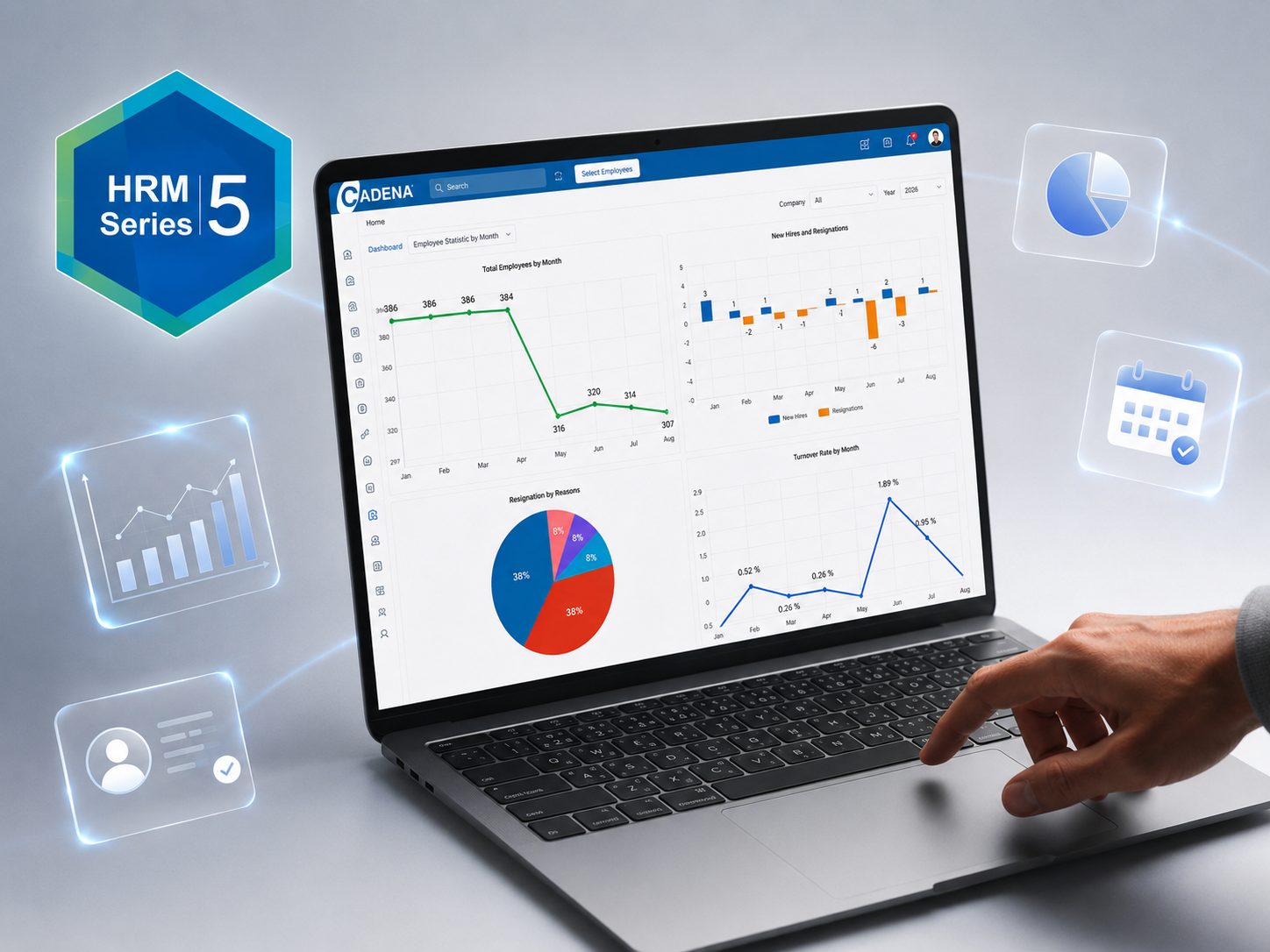
If you have ever chased a missing timesheet, rebuilt a payroll file late at night, or searched three folders for one employee contract, you already know the problem HRM is built to solve.
HRM stands for human resource management. In software terms, an HRM system brings the everyday work of HR into one place: employee records, attendance, leave, payroll, hiring, performance and training. Your team spends less time moving data between files and more time on people.
This guide explains what HRM is, what a good system includes, what it can do for a growing business, and why Southeast Asia adds some extra requirements. It is written for HR managers, finance leads and business owners who are new to HRM or comparing options.

What is HRM?
HRM has two meanings. It is the discipline of managing how an organization hires, pays, develops and keeps its people. It is also the software that supports that work. An HRM system is a single platform that stores employee data and automates the HR processes built on top of it.
You will see several similar terms. Vendors use them loosely, so judge a system by what it does, not by its label.
| Term | What it usually means | Typical scope |
|---|---|---|
| HRM system | Software for managing the full employee lifecycle | Employee data, attendance, leave, payroll, often talent modules |
| HRIS (human resource information system) | A system of record for employee data | Core records and reports, often fewer talent features |
| HCM (human capital management) | A broader term, common for large enterprise suites | Core HR plus talent, workforce planning and analytics |
| Payroll software | Software that calculates pay, tax and social insurance | Payroll only, and it may or may not connect to attendance and HR records |
Core modules of an HRM system
Most HRM systems are built from a few modules that share the same employee data. Cadena HRM Series 5, for example, is organized around four:
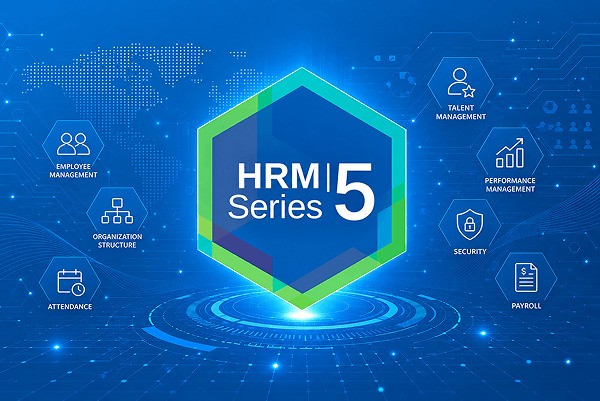
- Core: Attendance & Payroll. Employee records and organization structure, contracts with e-signature, leave, shift rostering and overtime, attendance from time clocks, and payroll with tax and social insurance calculations.
- Employee Self Services. A portal and mobile app where employees check payslips, request leave and submit overtime or expense claims, and managers approve in the same place.
- Talent Management. Recruitment, performance appraisal, competency management and training.
- Multi-Country Payroll. Payroll for several companies and countries from one login, with local tax and labor rules, currencies and group-level reporting.
You do not need every module on day one. Many companies start with attendance and payroll, where errors cost the most, and add self-service and talent management later.
What HRM does for your business
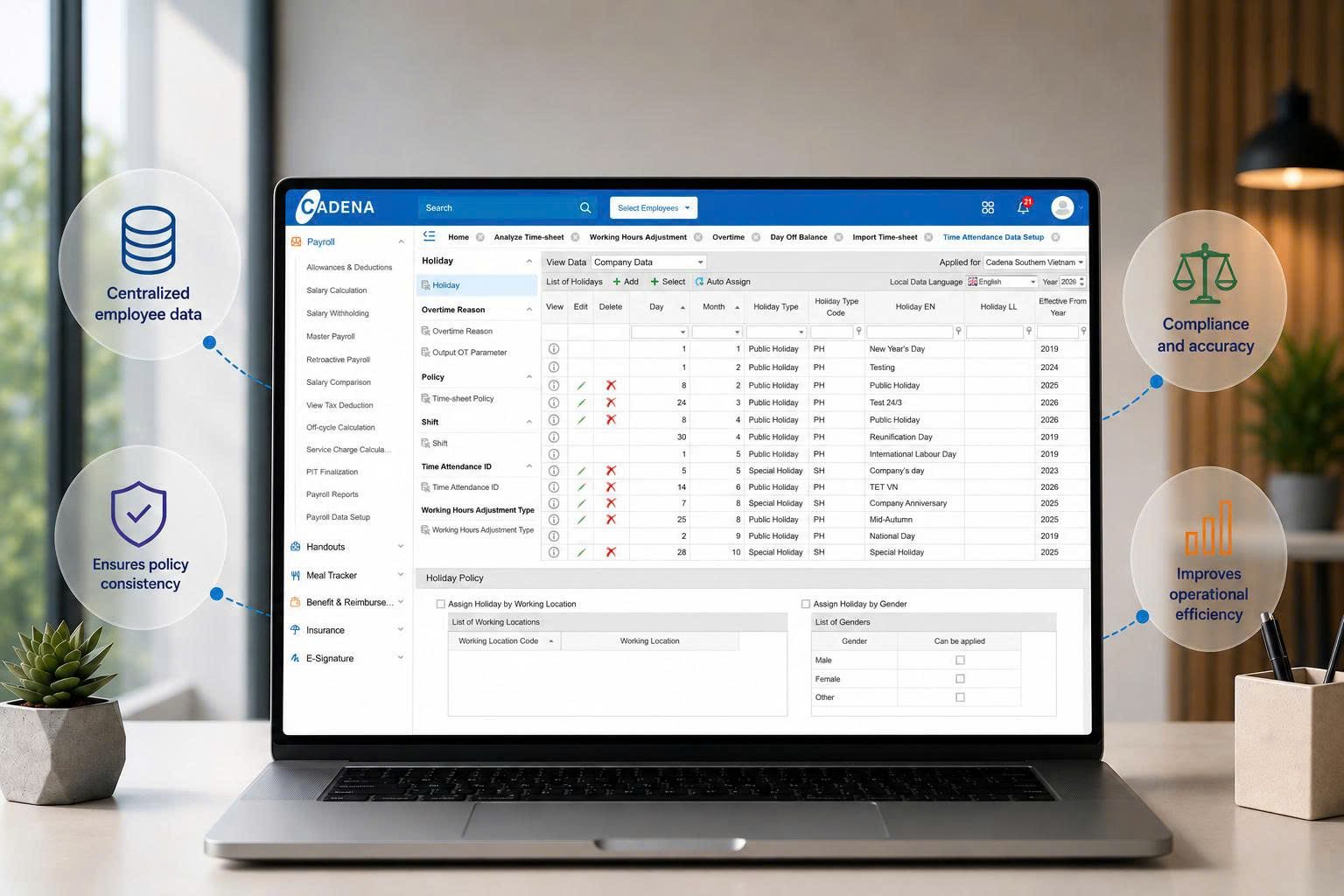
- Fewer payroll errors. When attendance flows straight into payroll, nobody re-types hours. Overtime is calculated from the clocked time and the rules you set once.
- A faster, calmer month-end. Good systems let you compare the current payroll with the previous cycle and flag differences in gross pay, deductions and tax before anyone approves.
- Less HR admin. Employees update their own details, request leave and download payslips themselves, so HR answers fewer routine questions.
- Easier compliance. Contracts, social insurance and tax rules live in one system with an audit trail of who changed what. In Vietnam, Cadena supports electronic labor contracts and connects to the national electronic labor contract platform.
- Better decisions. With clean data in one place, you can see headcount, overtime and leave patterns, and spot problems early.
Why Southeast Asia needs extra attention
If you operate in more than one country in the region, every country brings its own tax rules, social contributions, labor laws, currency and reporting formats. A system built for one market often struggles with the next.
| Country | Examples of statutory items an HRM system must handle |
|---|---|
| Vietnam | Social insurance, personal income tax, labor reports |
| Singapore | CPF, SDL, IRAS annual income tax forms |
| Malaysia | EPF, SOCSO, EIS, PCB/MTD |
| Philippines | SSS, PhilHealth, Pag-IBIG, withholding tax |
| Indonesia | PPh 21, BPJS contributions |
| Thailand | Social Security Fund, Provident Fund reporting |
Source: Cadena Multi-Country Payroll, which also covers Cambodia, Laos, Myanmar and Timor-Leste.
Rules also change. Vietnam's personal data protection law took effect on 1 January 2026, which affects how employee data must be handled (see our guide to protecting employee data in HRM software). Choose a vendor that keeps its local rules up to date, not just one that has a long feature list.
How to get started: a 5-step roadmap
- List your pain points. Write down the three to five tasks that cost the most time or cause the most errors, such as payroll calculation, leave tracking or contract renewals.
- Gather your data and rules. Collect the employee list, pay items, shift patterns, leave and overtime policies, and the tax and insurance rules for each country. Clean up your spreadsheets first, because the new system is only as good as the data you load.
- Shortlist vendors against your must-haves. Check local compliance, integrations, security and support, not just features.
- Run a pilot. Start with one entity or one team, and run the new system alongside your current process for a payroll cycle to compare results.
- Roll out, train and review. Train HR, managers and employees, then review after two or three payroll cycles and adjust.
Frequently asked questions
What does HRM stand for?
Human resource management. In business software, it refers to a system that manages employee data and HR processes such as attendance, leave and payroll.
Is HRM the same as HRIS?
They overlap. An HRIS is mainly a system of record for employee data, while an HRM system usually adds processes on top, such as payroll, workflows and talent management. Vendors use the terms loosely, so compare features.
Does a small or growing business need HRM?
Usually when headcount, sites or payroll complexity make spreadsheets slow or risky. See 7 signs your business has outgrown spreadsheets.
How long does implementation take?
It depends on company size, number of countries, data quality and integrations. A good vendor will give you a plan with milestones before you sign, not a single number.
Cloud or on-premise?
Both exist. Cadena HRM Series 5 can be deployed on-premise or in a private cloud. Ask each vendor what is included and who manages updates and backups.
Is employee data safe in an HRM system?
It can be, if the vendor has strong controls and you follow good practice on your side. Read how to protect employee data when using HRM software.
Next step
HRM works best when it fits how your business really runs. If you would like to see how attendance, payroll, self-service and talent management work together for a team like yours, talk to the Cadena team for a walk-through, or explore Cadena HRM Series 5.
About Cadena
Cadena is a leading provider of Human Resource Information Systems (HRIS) across Southeast Asia and a core member of the Humanica Group. Headquartered in Singapore with a strong operational hub in Vietnam, our team of approximately 120 experts in Ho Chi Minh City and Hanoi delivers specialized support and localized technology.
Our flagship platform, Cadena HRM Series 5, provides fully web-based, localized human resources, attendance and payroll solutions tailored to the intricate labor laws and business practices of Southeast Asia. We enable multinational companies and large local corporations to manage payroll compliance for multiple countries or entities through a single, unified login.